 emizofficial@gmail.com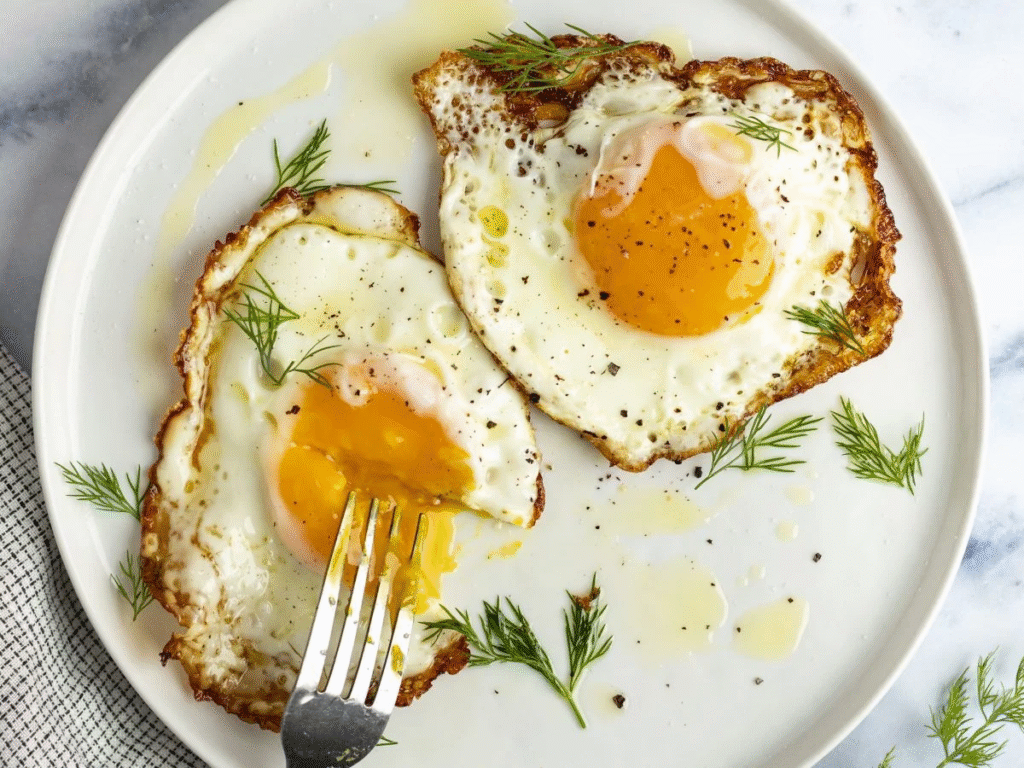
I have a very distinct memory of being about seven years old, standing on a step-stool, watching my grandmother fry an egg in a cast iron skillet slick with bacon grease. She’d crack the egg on the edge of the pan with a confident tap, and it would land with a furious sizzle. The edges would instantly turn golden and lacy, while the yolk stayed a perfect, wobbly sun. She’d slide it onto my toast, and I’d immediately pierce the yolk, watching it flood the plate like liquid gold. That’s the magic of a fried egg. It’s a two-texture wonder: crisp, browned edges and a runny, saucy center. And while my grandma’s high-heat method works, I’ve since found a more controlled way to get that perfect contrast every single time.
Quick Look
| Prep | Cook | Total | Feeds | Level |
|---|---|---|---|---|
| 1 min | 5 mins | 6 mins | 1-2 people | Easy |
Why You’ll Love This Recipe
- It gives you the perfect “lacey” edge and a runny yolk. The best of both worlds, no flipping required.
- It’s incredibly fast. We’re talking five minutes from fridge to plate.
- It elevates literally everything. Put a fried egg on a burger, on leftover pizza, on a pile of greens, on rice… it’s an instant sauce and a protein boost.
- You have total control over the yolk. I’ll teach you how to get it exactly how you like it.
Grab These
- 1-2 large, fresh eggs per person
- 1-2 tablespoons of fat (I prefer a mix of olive oil for flavor and a small pat of butter for browning)
- Kosher salt and freshly cracked black pepper
- A splash of water (our secret weapon!)
Let’s Make It
Get your skillet—non-stick is foolproof here—and place it over medium heat. Not high, medium. Add your fat. Let the butter melt and foam slightly, or the oil shimmer. You want it hot enough that the egg sizzles politely upon contact, not screams in terror.
Now, crack your egg into a small ramekin or cup first. I know, I know, it feels like an extra dish. But this is the single best trick for preventing broken yolks and stray shell fragments. It also lets you gently slide the egg into the pan, so it holds its perfect round shape. Once the egg is in the pan, immediately add a tablespoon of water to the empty space in the skillet, not on the egg itself, and cover the pan with a lid.
Walk away. But not for long. Just for about 60-90 seconds. That splash of water creates steam, which gently cooks the top of the egg white without you having to flip it and risk breaking the yolk. It’s the magic behind the “sunny-side up” egg with a fully set white.
After a minute and a half, lift the lid. The white should be completely set, opaque, and the yolk should be covered with a thin, translucent film, just waiting to be burst. If the white still looks a bit snotty (for lack of a better word!) around the yolk, re-cover for another 30 seconds. Slide it onto your plate, season with salt and pepper, and prepare for perfection.
Nutritional Facts (Per Serving – 1 egg)
| Nutrient | Amount |
|---|---|
| Calories | ~ 90 kcal |
| Protein | 6g |
| Carbohydrates | 0g |
| Fat | 7g |
| Fiber | 0g |
| Sugar | 0g |
| Note: Values are estimates |
Variations & Add-Ins
- The Classic Diner Style: After adding the egg to the pan, use your spatula to gently baste the top of the egg with the hot fat. This gives the yolk a slightly cooked-on-top texture without flipping.
- The “Over Easy” Flip: If you’re a flipper, go for it! Once the bottom is set, gently flip the egg and cook for just 15-20 seconds on the other side for a runny yolk, or 30-45 seconds for a more set yolk.
- Spicy & Crispy: Use chili oil or bacon fat as your cooking fat, and sprinkle the finished egg with a pinch of flaky sea salt and red pepper flakes.
Serving Ideas
- The classic: on top of buttery toast, maybe with a slice of sharp cheddar or a smear of avocado.
- The burger-topper. This is non-negotiable for a great burger in my house.
- On a bed of steaming jasmine rice with a drizzle of soy sauce and a dash of sriracha.
- On top of a grain bowl or a big salad—the yolk becomes the most incredible dressing.
Storage & Reheating
Fried eggs really don’t store or reheat well. They are a “make and eat immediately” situation. If you somehow have a leftover fried egg (a rarity in my home), you can store it in the fridge for a day, but the yolk will firm up and the white can get a bit tough. Reheat very gently in a pan over low heat.
My Two Cents (Pro-Tip)
The ramekin. Please, just use the ramekin. It feels like a small, annoying step, but it is the ultimate insurance policy against a broken yolk and a ruined egg. It gives you control and grace, and isn’t that what we all want in the kitchen?
You Asked, I’m Answering (FAQ)
- “Why do my eggs sometimes have crispy brown edges and other times not?” It’s all about the heat and the fat. Higher heat and more fat (especially butter) will give you those lacy, crispy edges. Lower heat and less fat will give you a more uniform, tender white.
- “My egg whites are always runny and undercooked while the yolk is overcooking!” This is the steam method’s time to shine! The covered pan and splash of water will set the top of the white without overcooking the precious yolk. It’s the solution to this exact problem.
- “What’s the best fat to use?” I love a combination. A neutral oil like avocado or grapeseed can take the high heat, and a little butter added in gives fantastic flavor. Pure butter can burn, so the mix is perfect.

 emizofficial@gmail.com